Reflection
Rediscovering the Roots: Reflections from the Symposium on Catholic Education
The Writer is a Seminarian of Uganda Martyrs National Major Seminary, Alokolum who attended the Symposium on Catholic Education at St. Thomas Aquinas National Major Seminary Katigondo.
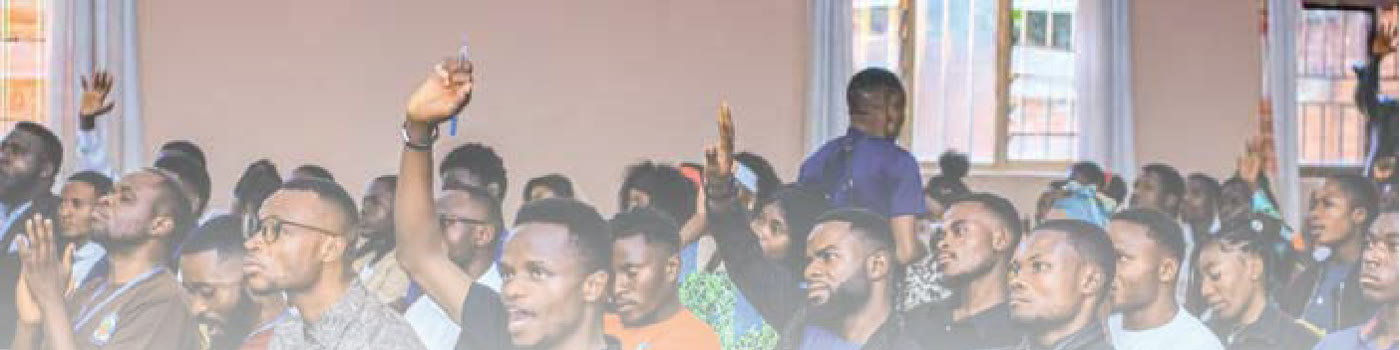
From the 4th to the 6th of June 2026, St. Thomas Aquinas Katigondo Seminary in Masaka Diocese played host to a rich and thought-provoking Symposium on Catholic Education, organized by the St. John Henry Newman Institute (SJHNI). As a seminarian privileged to attend, I return to my Alma Mater to share some little insights from a renewed conviction: that the future of the Church, and indeed of the salvation of souls, is inseparable from the education we offer the young.
Education as a Path to Heaven
The symposium opened with introductory reflections from Rev. Fr. Joseph Lugalambi, PhD, who reminded participants that Catholic education is, at its heart, an act of evangelization aimed at the salvation of souls. “If you want to kill a culture, kill education,” he warned, echoing the ancient truth that education is the vessel through which the best of a culture — its faith, virtues, and wisdom — is handed down from one generation to the next. Drawing on Simone Weil’s image of roots and flowers, Fr. Lugalambi cautioned that without deep roots, the flowers of any renewal will inevitably wither.
Naming the Crisis
Mr. Zachary Good, Director of Formation at SJHNI, did not shy away from naming the crisis facing Catholic education today: a culture increasingly confused about the dignity of life, marriage, and identity; a Church where, in the American context, only a small fraction of Catholics practise their faith fully; and Catholic founded schools that are closing at an alarming rate even as the Catholic population grows. Citing Russell Kirk, he observed that society has been “living off its educational capital” for three centuries without replenishing it.
His proposed antidote — Perennial Catholic Education — rests on seeing the human person as made in the image of God, and on five structural pillars: the Transcendentals (Truth, Goodness, Beauty), the Liberal Arts (the Trivium and Quadrivium), the Virtues, the Humanities, and proficiency in reading, writing, speaking, and listening. True teaching, he insisted, is an art rooted in love, centred on Christ the Logos, and ultimately ordered toward the restlessness St. Augustine spoke of — hearts that find no rest until they rest in God.
The Church’s Enduring Wisdom
A historical survey traced how the Church, for nineteen centuries, instinctively formed saints as Mother and Teacher long before formal doctrines on education existed — from Pope Leo XIII’s Spectata Fides (1885) through Vatican II’s Gravissimum Educationis to Pope Leo XIV’s recent reflections in Drawing New Maps of Hope (2025) and Magnifica Humanitas (2026). Five marks were offered as the litmus test of an authentically Catholic school: it must be inspired by a supernatural vision, founded on a Christian anthropology, animated by communion, imbued with a Catholic worldview, and sustained by Gospel witness.
Christ the Teacher, and the Means of Formation
Dr. Jeffrey S. Lehman of the Augustine Institute offered two dense but deeply pastoral sessions on “Following Christ the Teacher.” Education, he argued, begins and ends in abiding with Christ, friendship with God and the perfection of human nature through a “harmony of well-ordered loves.” He then turned to the practical means: teachers animated by love of God, truth, and students; a curriculum unified around Christ rather than fragmented into disconnected subjects; and a school community: parents, teachers, and pastors woven together around the liturgical life.
Forming the Moral Imagination
In a particularly memorable session, Mr. Good returned to speak on forming the moral imagination through nature, art, work, and above all, story. Fairy tales, he said, are a child’s first “morality play,” clearing the way — as Ethel Pochocki put it — for sanctity. Through Chesterton’s reading of Jack the Giant Killer, Cinderella, and Beauty and the Beast, we were reminded that stories teach children not only what is true, but who they are called to become.
Number, Beauty, and the Liturgy
The symposium also explored the Quadrivium — geometry, arithmetic, astronomy, and music — as a “dialogue with nature” that trains the mind to perceive the ratio and proportion woven into creation, visible in works as varied as the Vitruvian Man and St. Peter’s Basilica. The final session turned to liturgy as the sustaining fuel of Catholic formation, closing with the searching words of Dom Jean-Baptiste Chautard: “If the priest is a saint, the people will be fervent... but if the priest is only decent, the people will be godless.”
For those of us being formed for priesthood at Alokolum, this symposium was more than an academic exercise. It was a summons. If, as Chautard reminds us, the spiritual life of a people mirrors that of their priest, then our own formation — intellectual, human, and spiritual — is itself the seed of whatever renewal our schools and parishes will one day need. Perennial Catholic Education is not simply a philosophy for classrooms; it is an invitation to every future shepherd to first let Christ form him, so that he may, in turn, help form others.
Cor ad Cor Loquitur — Heart speaks to Heart.
St. John Henry Newman
From The Star Herald Bulletin, 27 September 2026, published by The Writer’s Club, Alokolum National Major Seminary.